
Introduction
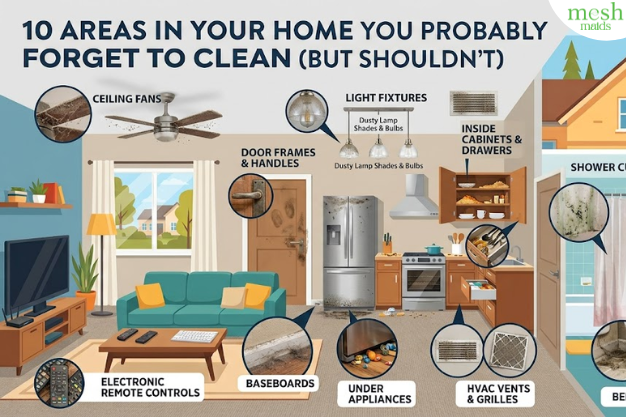
The areas in your home you probably forget to clean include light switches, door handles, baseboards, ceiling fans, air vents, behind appliances, under furniture, garbage bins, window tracks, and remote controls. If you clean these areas, it will not only improve indoor air quality but also reduce the spread of germs. And if you ever feel overburdened in cleaning these neglected areas, you can always rely on professional house cleaning services in North York like Mesh Maids as expert cleaners can clean both the and hidden areas professionally.
These spots gradually accumulate dust, pet hair, food residue, fingerprints, and bacteria because they are missed during everyday basis cleaning. In this guide, we’ll walk through the 10 commonly forgotten areas that deserve regular attention, explain why each one matters, and share practical cleaning tips to help you maintain a healthier, fresher home. Whether you prefer DIY cleaning or rely on experienced professionals for routine house cleaning, knowing what to clean beyond the obvious can make a noticeable difference in your home’s overall cleanliness.
Why Cleaning These Forgotten Areas Is Important
These neglected areas may not grab your attention, but they can affect your home’s overall cleanliness. Including these areas in your cleaning routine or hiring professional house cleaning services like Mesh Maids to take care of these areas.
Benefits of cleaning forgotten areas:
Improves Indoor Air Quality – Removes hidden dust, allergens, and pet dander that can circulate through your home.
Reduces Germs and Bacteria – Frequently touched surfaces like light switches, door handles, and remotes can harbor harmful microbes.
Helps Prevent Mold Growth – Cleaning moisture-prone areas reduces the risk of mold and mildew developing.
Keep Pests Away – Crumbs, grease, and debris behind appliances or inside bins can attract insects and rodents.
Eliminates Unpleasant Odors – Cleaning hidden dirt and bacteria helps keep your home smelling fresh.
Extends the Life of Fixtures and Appliances – Regular maintenance prevents dust and grime buildup that can reduce efficiency and cause wear.
Creates a Healthier Living Environment – Especially beneficial for children, seniors, pets, and people with allergies or asthma.
Maintains a Consistently Clean Home – Paying attention to overlooked areas makes your home look and feel cleaner overall.
Reduces the Need for Costly Deep Cleaning – Routine maintenance of these areas prevents stubborn dirt and grime from accumulating over time.
10 Areas You Forget to Clean
Even the cleanest homes have hidden spots that are easy to overlook during routine cleaning. Here are 10 commonly forgotten areas that deserve regular attention to keep your home healthier, fresher, and truly clean.
1. Ceiling Fans
Ceiling fans are one of the most commonly overlooked areas during routine house cleaning. Although they constantly circulate air throughout your home, their blades gradually collect layers of dust, pet hair, and other airborne particles. Every time the fan is turned on, some of that dust is released back into the room, reducing indoor air quality and leaving surfaces dusty.
Why It Is Important to clean your Ceiling Fans
Dusty ceiling fans can:
- Trigger allergies and respiratory irritation.
- Recirculate dust throughout your home.
- Leave visible dust on furniture, floors, and ceilings.
- Affect the overall cleanliness of your living space.
How to Clean Ceiling Fans
To clean your ceiling fan safely:
- Turn the fan off and allow the blades to come to a complete stop.
- Use a microfiber cloth or a pillowcase to trap dust while wiping each blade.
- Remove stubborn buildup with a vacuum cleaner fitted with a soft brush attachment.
- Wipe the fan housing and light fixtures before turning the fan back on.
Cleaning Tip: Clean your ceiling fans every 1–2 months, or more frequently if you have pets, allergies, or use your fans daily.
2. Baseboards
Baseboards are often overlooked during regular cleaning, but they quietly collect dust, pet hair, dirt, and scuff marks from everyday activities. Since they sit close to the floor, they easily trap debris and are usually only noticed when the buildup becomes visible. Keeping baseboards clean helps maintain a polished appearance and prevents dust from spreading throughout your home.
Why it is important to clean Baseboards
Dirty baseboards can:
- Collect layers of dust and allergens.
- Make freshly cleaned rooms look less tidy.
- Hold onto pet hair and everyday grime.
- Develop stains and marks over time.
How to Clean
To clean your baseboards effectively:
- Start by vacuuming or dusting to remove loose dirt and debris.
- Wipe the surface using a microfiber cloth with:
- Warm water
- A small amount of mild dish soap
- Use gentle pressure to remove fingerprints, marks, and buildup.
- Dry the baseboards afterward to prevent moisture damage, especially on painted surfaces.
Cleaning Tip: Wipe baseboards every few weeks and include them in your deep cleaning routine to keep your home looking fresh and well-maintained.
3. Behind and Under Appliances
The spaces behind and underneath large appliances are some of the most overlooked areas in a home. Refrigerators, ovens, washing machines, and dryers often remain in the same position for years, allowing dust, food crumbs, grease, pet hair, and moisture to accumulate unnoticed. Regularly cleaning these hidden areas helps maintain a healthier home and keeps your appliances working efficiently.
Why It Matters
Neglecting these areas can:
- Attract insects and pests due to hidden food debris.
- Cause unpleasant odors from trapped dirt and moisture.
- Reduce appliance efficiency by restricting airflow.
- Allow dust and grime buildup that becomes harder to remove over time.
How to Clean
Follow these steps for a safer and more effective clean:
- Carefully move appliances when possible and safe to do so.
- Use a vacuum to remove loose dust, crumbs, and pet hair.
- Wipe the area with a mild cleaner and microfiber cloth.
- Clean refrigerator condenser coils if they are accessible, as dust buildup can make the appliance work harder and increase energy use.
Cleaning Tip: Aim to clean behind and under appliances every 3–6 months. Regular maintenance helps prevent stubborn buildup and keeps your kitchen and laundry areas fresher.
4. Light Switches and Door Handles
Light switches and door handles are among the most frequently touched surfaces in any home, yet they are often missed during regular cleaning routines. Because they are used multiple times every day, they can quickly collect fingerprints, oils, dirt, and germs transferred from hands.
Why It Matters
These high-touch areas can accumulate:
- Bacteria and germs from frequent contact.
- Oils and residue from hands.
- Dirt and grime that affect the overall cleanliness of your home.
Regular cleaning of these surfaces helps maintain better hygiene and reduces the spread of everyday germs throughout your living space.
How to Clean
To safely clean light switches and door handles:
- Use a disinfecting wipe or a microfiber cloth lightly dampened with an appropriate disinfectant.
- Wipe the surface gently, paying attention to edges and corners where dirt collects.
- Avoid spraying liquid directly onto electrical switches to prevent damage.
- Allow surfaces to air dry completely after cleaning.
Cleaning Tip: Add light switches and door handles to your weekly cleaning routine, especially in high-traffic areas like entrances, kitchens, and bathrooms.
5. Bathroom Exhaust Fans
Bathroom exhaust fans play an important role in controlling moisture and improving air circulation after showers. However, they are often overlooked during regular cleaning and can accumulate layers of dust over time. A clogged or dirty fan may struggle to remove humidity effectively, allowing excess moisture to remain in the bathroom.
Why It Matters
A poorly maintained exhaust fan can contribute to:
- Mold and mildew growth.
- Increased condensation on walls and mirrors.
- Peeling paint and moisture damage.
- Poor bathroom air quality.
Keeping the fan clean helps maintain proper airflow and reduces moisture-related issues.
How to Clean
Follow these steps to clean your bathroom exhaust fan safely:
- Turn off the power before starting.
- Remove the fan cover and wash it with warm, soapy water.
- Use a vacuum with a brush attachment to remove dust from the fan housing.
- Allow the cover to dry completely before reinstalling it.
Cleaning Tip: Clean your bathroom exhaust fan every six months to maintain airflow and help prevent moisture buildup.
6. Window Tracks
While many homeowners regularly clean their windows, the tracks underneath the glass are often overlooked. These narrow spaces can quietly collect dust, dirt, pollen, dead insects, and moisture over time. Without regular cleaning, buildup can affect window operation and make the area look neglected.
Why It Matters
Dirty window tracks can:
- Trap allergens like dust and pollen.
- Create unpleasant buildup and odors.
- Hold moisture that may encourage mold growth.
- Make windows harder to open and close smoothly.
How to Clean
To clean window tracks effectively:
- Start by vacuuming loose dirt, dust, and debris.
- Use a soft brush to loosen buildup from corners and edges.
- Wipe the tracks with warm, soapy water and a microfiber cloth.
- Use cotton swabs to reach tight spaces and remove stubborn dirt.
- Dry the tracks completely to prevent moisture buildup.
Cleaning Tip: Include window tracks in your seasonal cleaning routine to keep your windows functioning properly and your home looking well-maintained.
7. Trash Cans
Taking out the garbage regularly does not mean the trash can itself is clean. Over time, small leaks, food residue, spills, and moisture can collect inside the bin, even when using garbage liners. This buildup can create unpleasant odors and provide a place for bacteria to grow.
Why cleaning it matters
Dirty trash cans can:
- Develop strong and unpleasant odors.
- Harbor bacteria from food waste and household debris.
- Attract insects and pests.
- Leave stains and residue that become harder to remove over time.
How to Clean
To keep your trash cans fresh and hygienic:
- Empty the bin completely and remove any leftover debris.
- Wash the inside and outside using:
- Warm water
- Dish soap
- A disinfecting cleaner
- Scrub areas with visible buildup or stains.
- Rinse and allow the bin to dry completely before adding a new liner.
Cleaning Tip: Clean your trash cans at least once a month, or more often if they are used frequently for food waste or household garbage.
8. Air Vents and HVAC Registers
Air vents and HVAC registers play an important role in maintaining airflow throughout your home, but they are often overlooked during routine cleaning. Since your heating and cooling system continuously circulates air, dust, pet hair, and airborne particles can gradually collect on vent covers and inside the duct openings.
Why It Matters
Dirty air vents can contribute to:
- Increased dust buildup around your home.
- Reduced indoor air quality.
- Restricted airflow and reduced HVAC efficiency.
- More frequent dust accumulation on furniture and surfaces.
How to Clean
To keep your vents and registers clean:
- Vacuum vent covers regularly using a brush attachment.
- Remove vent covers occasionally and wash them with warm, soapy water.
- Dry them completely before reinstalling.
- Replace HVAC filters according to the manufacturer’s recommendations to support cleaner air circulation and better system performance.
Cleaning Tip: Include air vents and registers in your seasonal cleaning routine, especially before switching between heating and cooling seasons.
9. Shower Curtains and Liners
Shower curtains and liners are often overlooked during bathroom cleaning, even though they are constantly exposed to moisture, soap residue, and humidity. The damp environment inside a bathroom creates ideal conditions for mildew, mold, and buildup to develop on the curtain surface over time.
Why It Matters
Dirty shower curtains and liners can lead to:
- Mildew and mold growth.
- Unpleasant musty odors.
- Soap scum and residue buildup.
- Reduced freshness and cleanliness in your bathroom.
Signs It’s Time to Clean
Look out for:
- Pink stains or discoloration.
- Black spots or mildew marks.
- A musty smell.
- Visible soap residue.
How to Clean
To clean shower curtains and liners:
- Check the manufacturer’s care instructions before washing.
- Many fabric and plastic liners can be cleaned in a washing machine using a gentle cycle.
- Add a few towels during the wash cycle to help remove buildup through gentle scrubbing.
- Allow the curtain or liner to dry completely before hanging it back.
Cleaning Tip: Keep shower curtains and liners fresh by cleaning them regularly and allowing proper airflow in the bathroom to reduce moisture buildup.
10. Remote Controls and Electronics
Remote controls, keyboards, computer mice, gaming controllers, and smartphones are some of the most frequently handled items in your home, yet they are often missed during regular cleaning. Because electronics do not always appear visibly dirty, they can quietly collect dust, skin oils, food particles, and everyday germs over time.
Why It Matters
Uncleaned electronics can accumulate:
- Bacteria and germs from frequent handling.
- Dust that settles between buttons and surfaces.
- Oils and residue from hands.
- Food particles from daily use.
Regular cleaning helps maintain better hygiene and keeps your frequently used devices in better condition.
How to Clean
To safely clean your electronics:
- Turn off and unplug devices before cleaning.
- Use a microfiber cloth lightly dampened with an electronics-safe cleaner.
- Clean around buttons, edges, and small gaps using cotton swabs.
- Avoid spraying liquid directly onto devices or allowing moisture to enter openings.
Cleaning Tip: Wipe down frequently used electronics at least once a week, especially devices shared by multiple family members.
How Often Should You Clean These Forgotten Areas?
Creating a simple schedule makes these tasks much easier to manage.
| Area | Suggested Frequency |
| Ceiling fans | Every 1–2 months |
| Baseboards | Monthly |
| Behind appliances | Every 3–6 months |
| Light switches | Weekly |
| Bathroom exhaust fans | Every 6 months |
| Window tracks | Every 3 months |
| Trash cans | Monthly |
| Air vents | Every 2–3 months |
| Shower curtains | Monthly |
| Electronics | Weekly |
You don’t need to clean everything in one day. Spreading these tasks across the month makes home maintenance much more manageable.
Conclusion
Keeping your home truly clean goes beyond the surfaces you see every day. Forgotten areas like ceiling fans, baseboards, air vents, appliance spaces, and frequently touched electronics can collect dust, germs, and buildup that affect your home’s comfort and hygiene. Adding these areas to your regular cleaning routine helps maintain a healthier living environment and prevents dirt from becoming harder to remove over time.
If you don’t have the time or tools to clean every hidden corner, you can book professional house cleaning services like Mesh Maids that can help you with detailed cleaning that covers both visible and overlooked areas. With the right cleaning approach and regular maintenance, you can enjoy a fresher, healthier, and more comfortable home all year round.


