
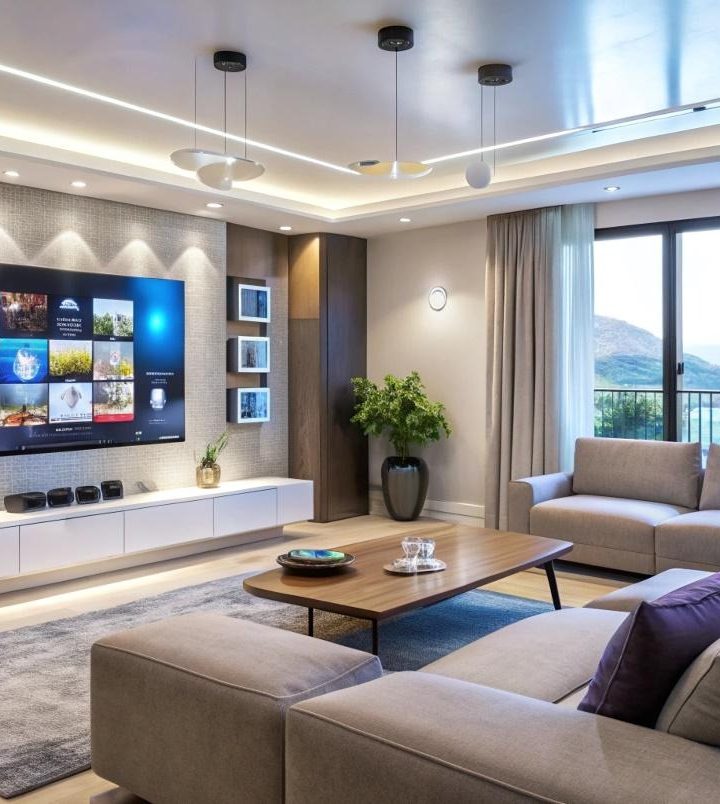
A media wall is a custom-built feature wall that neatly houses televisions, entertainment equipment, and wiring, creating a single, streamlined focal point for the room. Televisions are flush-mounted on the surface, with concealed spaces for soundbars, speakers, and gaming consoles. With built-in cabinetry, hidden compartments, and open or closed shelving, it provides space for books, decor, and media accessories.
Have you been thinking about a media wall but don’t know where to begin? Then you are just in the right place. In the media wall guide, we will highlight key information to help you install one.
Spatial Proportions & Depth
When installing media walls, a basic consideration is to keep the room’s depth and available space in mind. A media wall should complement your space rather than overwhelm it. In smaller rooms, opt for slimmer, sturdy frames or wall-mounted fireplaces to preserve floor space.
Media walls require a depth of approximately 300 mm to 500 mm to properly recess the television and fireplace cavities and the interior natural timber. However, avoid making your television and fireplace the same width, because when they match perfectly, they create a rigid, striped appearance.
It is recommended to make one element slightly wider than the other to make the wall feel intentionally designed rather than merely assembled.
Layout, Viewing Heights, & Airflow
One of the most common mistakes is installing the fireplace too high, which forces the TV to sit at an uncomfortable viewing angle. Therefore, keep your fireplace at or near the skirting board level so the TV naturally rests at eye level when you are seated.
One technical consideration when building the recess for your TV: leave at least 1 inch of breathing space on each side to allow airflow and prevent overheating, while still giving the TV a sleek, flush look.
Lighting & Window Coverings
Incorporating smart LED strip lights into recessed side shelves or behind the TV panel adds dimension and helps prevent eye strain in a dark room. Drill a wiring hole at least 30-40 mm back from the timber face to prevent screws from piercing the channel when the plasterboard is installed.
To create a mesmerizing, dark effect, it is essential to use window coverings. Adding these coverings will block the outside from coming inside and affecting your television experience. However, for a better effect, you can use window coverings on both the inside and the outside of the window.
Integrated Fireplace Requirements
Ensure you select a front-facing electric fireplace certified for media walls. Standard electric fireplaces that vent heat from the top can damage your TV and warp the surrounding drywall framework. Therefore, be very careful when integrating your fireplace with your TV.
Additionally, you must select and purchase your specific fireplace model before framing begins because the framing team needs exact millimeter measurements to build the load-bearing supports and cutouts.
Cable Management & Future-Proofing
Conceal wires behind plasterboard to achieve an undetectable wall look. Plan for the future when concealing these wires. Run extra black conduit piping inside the stud work to make it easy to fish new HDMI cords, fiber cables, or power leads through the wall if you switch out the device later on the line.
Remember to account for external media devices such as gaming consoles, streaming boxes, routers, and soundbars. Incorporate closed lower cabinets, side cavities, or hidden drawers to keep these peripherals accessible yet out of sight.